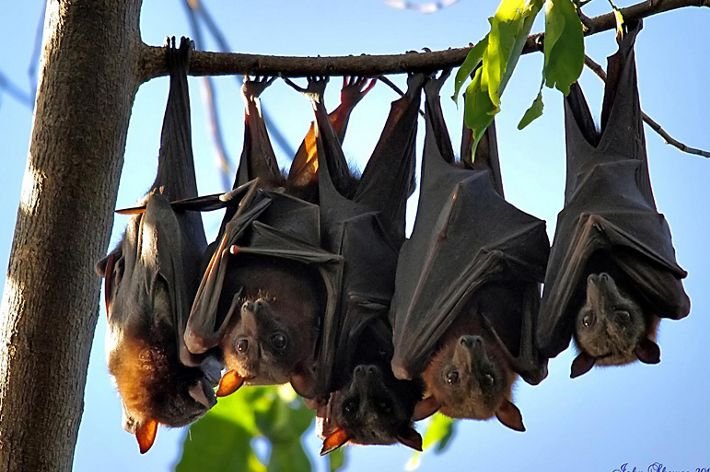
Bats are extraordinary mammals that have evolved unique traits not seen in any other group of mammals. They belong to the animal order Chiroptera, a name derived from Greek meaning “hand wing,” which refers to the structure of their wings — essentially elongated fingers connected by a thin, flexible skin membrane. Bats are the only mammals that are capable of true powered flight, setting them apart from all other mammalian species.Wikipedia
What Makes Bats Special?
Unlike birds, bats have fur instead of feathers and give birth to live young, which they feed with milk. Their wings contain the same basic bones found in human hands, but they are adapted for flight thanks to thin skin stretched between the bones. Most bats are nocturnal — active at night and resting during the day — which helps them avoid predators and hunt efficiently.Bat Conservation Ireland
There are well over 1,300 known bat species around the world, making them one of the most diverse groups of mammals. They inhabit a wide range of environments, from tropical rainforests and deserts to caves and even urban areas. Bats can be found almost everywhere on Earth except for the coldest polar regions.Canadian Wildlife Federation
Types of Bats
Although bats are often thought of as similar, there are two main groups:
- Megabats (Fruit Bats / Flying Foxes):
These are generally larger bats with excellent eyesight that feed on fruit, nectar, and flowers. They play an important role in spreading seeds and pollinating plants.Wikipedia - Microbats:
These smaller bats primarily eat insects and use echolocation — a system where they emit high-frequency sounds and listen to the echoes — to locate prey in complete darkness. Microbats make up the majority of bat species worldwide.Wikipedia
Where Do Bats Live?
Bats can be found in diverse habitats including:
- Caves
- Hollow trees
- Attics and bridges
- Forests, deserts, and wetlands
During the day, bats rest in sheltered spots called roosts. Some species hibernate when temperatures drop, while others migrate to warmer areas during winter months.IFAW
What Do Bats Eat?
Bat diets vary widely depending on the species:
- Insectivorous bats: Most bats eat insects, including mosquitoes, beetles, and moths. They are important natural pest controllers.Virginia Wildlife
- Fruit bats and nectar feeders: These bats feed on fruit juices and flower nectar, helping pollinate plants and spread seeds.Wikipedia
- Unique diets: A few bat species feed on fish, frogs, and even blood, although blood-feeding bats are rare and prefer livestock over humans.Wikipedia
How Do Bats Navigate?
Many bats use echolocation, a sophisticated biological sonar system, to find food and avoid obstacles in the dark. They emit sound waves that bounce off objects, and by listening to the returning echoes, bats can detect the size, location, and movement of prey. This system allows them to navigate and hunt even in pitch-black conditions.Wikipedia
Life Cycle and Family Life
Most bats give birth to a single pup each year, and mothers often care for their young in nursery colonies where many bats roost together. Young bats stay attached to their mother’s fur or cling to her while she flies until they are strong enough to fly on their own. Roguery and social behaviors vary significantly across species.San Diego Zoo Animals
Why Bats Matter
Bats are essential to natural ecosystems and also benefit humans in important ways:
Natural Pest Control
Bats eat huge quantities of night-flying insects, reducing the need for chemical pesticides and helping protect crops.Virginia Wildlife
Pollination and Seed Dispersal
Fruit and nectar-feeding bats help pollinate flowers and spread seeds — vital processes for many plant species, including fruit trees and rainforest flora.Wikipedia
Environmental Indicators
Bats are sensitive to changes in habitat and climate, so healthy bat populations often signal healthy ecosystems.IFAW
Challenges and Protection
Despite their importance, many bat populations face threats due to habitat loss, disease, climate change, and human disturbance. Conservation efforts aim to protect roosting sites, reduce human impacts, and raise awareness about the ecological value of bats.
Conclusion
Bats are remarkable mammals with unique adaptations, from powered flight to sophisticated navigation systems. Their diversity, ecological roles, and mysterious nighttime lives make them one of the most captivating animal groups on the planet. By understanding and protecting bats, we preserve not only fascinating wildlife but also healthy ecosystems for generations to come.