
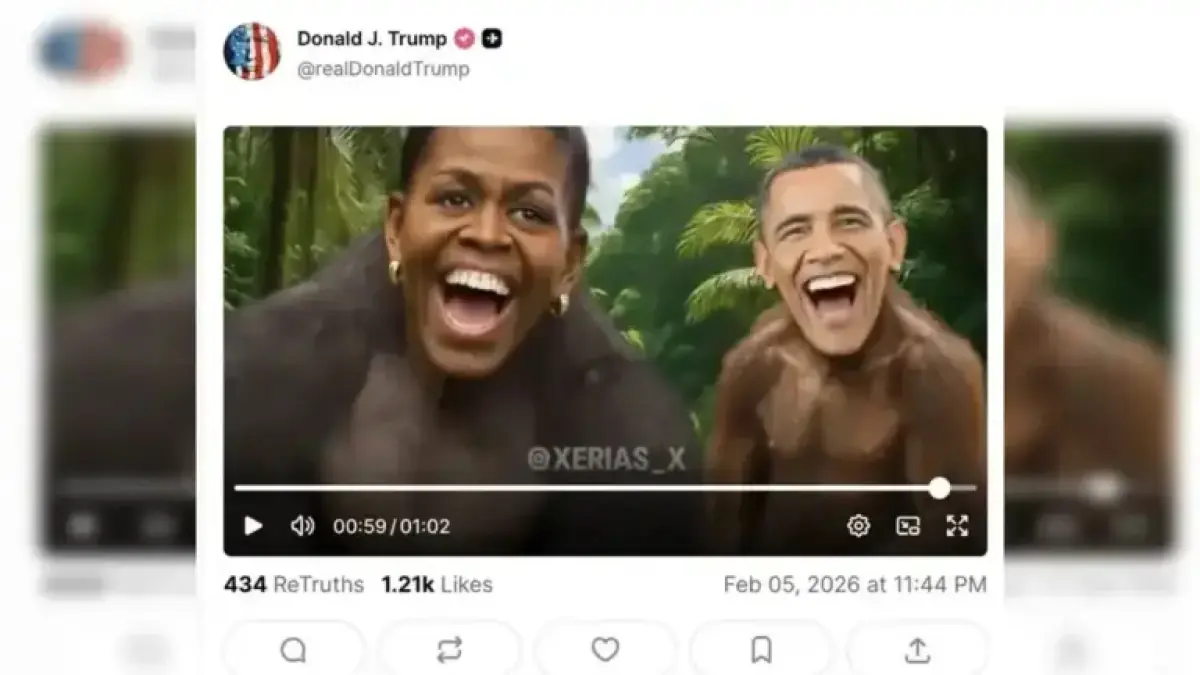
Former U.S. President Donald Trump has drawn widespread criticism on social media following the release of a video on his platform, Truth Social, that many viewers described as offensive and racially insensitive. The video, which appears to mock former President Barack Obama, quickly ignited debate across political and social circles.
Details of the Video Post
The video was shared on February 3 and circulated rapidly beyond Truth Social, drawing attention from users on multiple platforms. While Trump did not provide extensive commentary alongside the post, the edited content itself prompted strong reactions from critics who said it crossed acceptable boundaries of political expression.
Several commentators characterized the video as racially charged, arguing that it relied on stereotypes and messaging that could deepen existing social divisions.
Public and Media Reaction
Reactions were swift and polarized. Many social media users condemned the post, emphasizing the need for public figures—particularly former presidents—to exercise caution and responsibility in their online messaging. Civil rights advocates and political commentators voiced concern over the tone of the video and its potential impact on public discourse.
At the same time, Trump supporters defended the post as political commentary or satire, arguing that criticism of political figures is a long-standing element of American political culture. The differing reactions highlighted the sharp divide in how Trump’s online activity is perceived.
Trump’s Use of Social Media
Trump has remained highly active on Truth Social, using the platform as his primary means of communicating with supporters. His posts frequently generate significant engagement and controversy, reinforcing his influence in online political discussions.
Critics argue that some of his content, particularly when touching on race or identity, risks inflaming tensions. Supporters, however, see his direct communication style as authentic and unfiltered.
Broader Implications
Content perceived as racially insensitive can have lasting effects on public trust and political dialogue. Analysts note that incidents like this one may further entrench divisions among voters and shape narratives surrounding leadership responsibility in the digital age.
The situation also raises broader questions about how social media platforms manage controversial political content and where the line should be drawn between free expression and harmful rhetoric.
Conclusion
The backlash surrounding the video underscores the ongoing controversy that follows Donald Trump’s online presence. As discussions continue, the incident serves as another example of how digital platforms amplify political messaging—and how such messaging can influence conversations about race, responsibility, and leadership in the United States.
How this episode ultimately affects Trump’s political standing remains to be seen, but it has already reignited debate over the role of social media in modern politics.
Leave a Reply