Deep in the green landscapes of northeastern Cambodia lies one of the country’s most fascinating natural attractions: Yeak Laom Lake, also known as Boeung Yeak Laom.
Surrounded by tropical forest and famous for its nearly circular shape, this remarkable lake offers visitors an unusual combination of geological history, natural beauty, and Indigenous cultural heritage.
Located near Banlung, the capital of Ratanakiri Province, Yeak Laom is more than a peaceful destination for sightseeing. It is widely recognized as a volcanic crater lake and holds special cultural significance for the local Tampuan community.
For generations, the lake has inspired stories, traditions, and curiosity about the natural forces that created its distinctive landscape.
1. A Beautiful Lake Formed by Ancient Volcanic Activity
One of Yeak Laom Lake’s most remarkable features is its geological origin.
Unlike many lakes formed by rivers, dams, or seasonal flooding, Yeak Laom occupies a depression associated with ancient volcanic activity.
Volcanic crater lakes can develop when volcanic processes create a basin that later fills with water.
Over long periods, rainfall and other natural processes may transform such depressions into permanent lakes.
Today, Yeak Laom’s rounded shoreline and surrounding landscape provide a striking reminder of the region’s geological past.
How Old Is Yeak Laom Lake?
Many Cambodian tourism descriptions state that the lake was formed approximately 4,000 years ago.
However, other publications suggest a substantially older origin, sometimes estimating hundreds of thousands of years.
Because these estimates differ, the exact geological age should not be treated as conclusively established without reference to detailed scientific dating studies.
What is clear is that Yeak Laom is associated with ancient volcanic processes and remains one of Ratanakiri’s best-known geological landmarks.
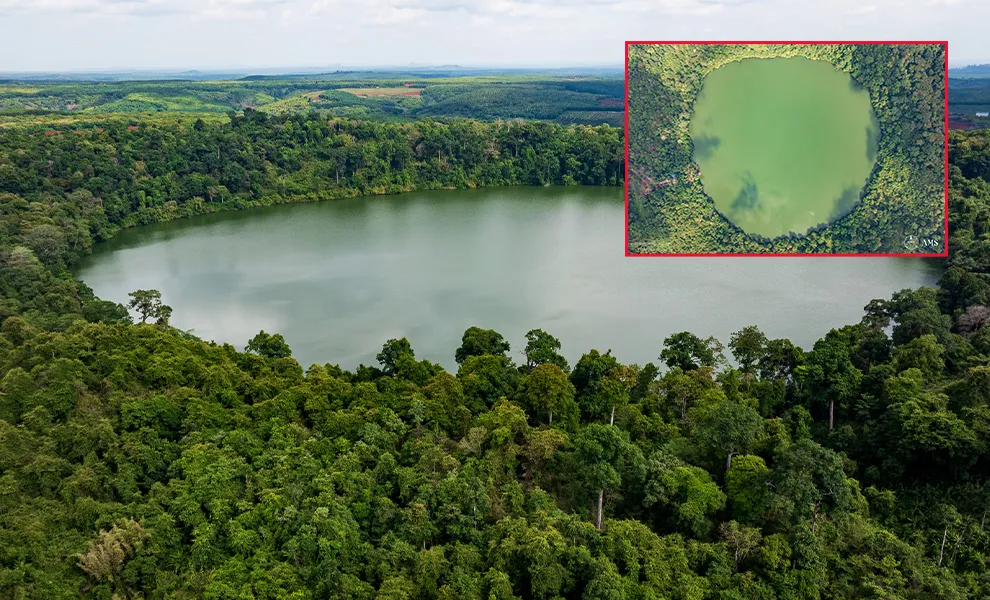
2. The Lake’s Remarkable Circular Shape
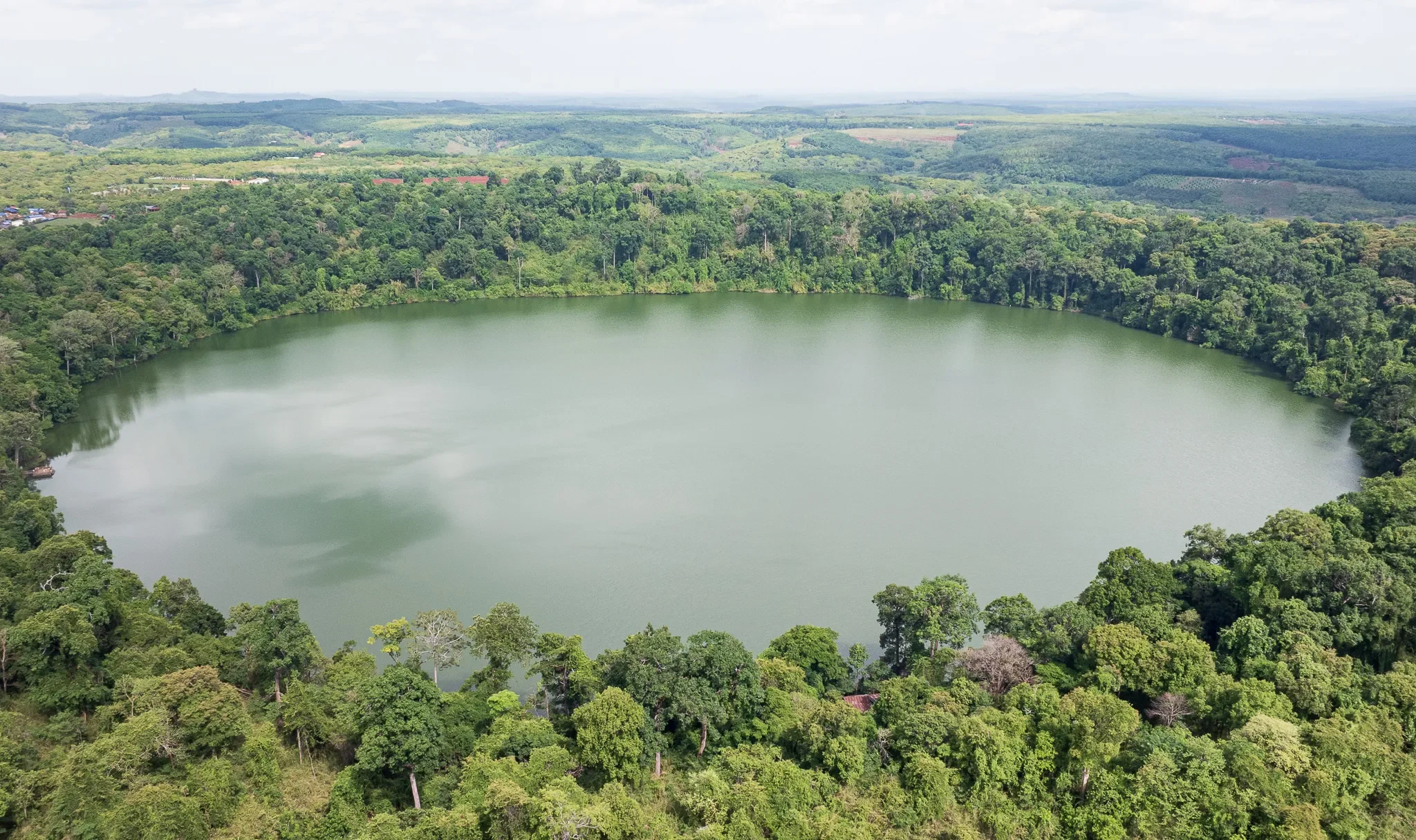
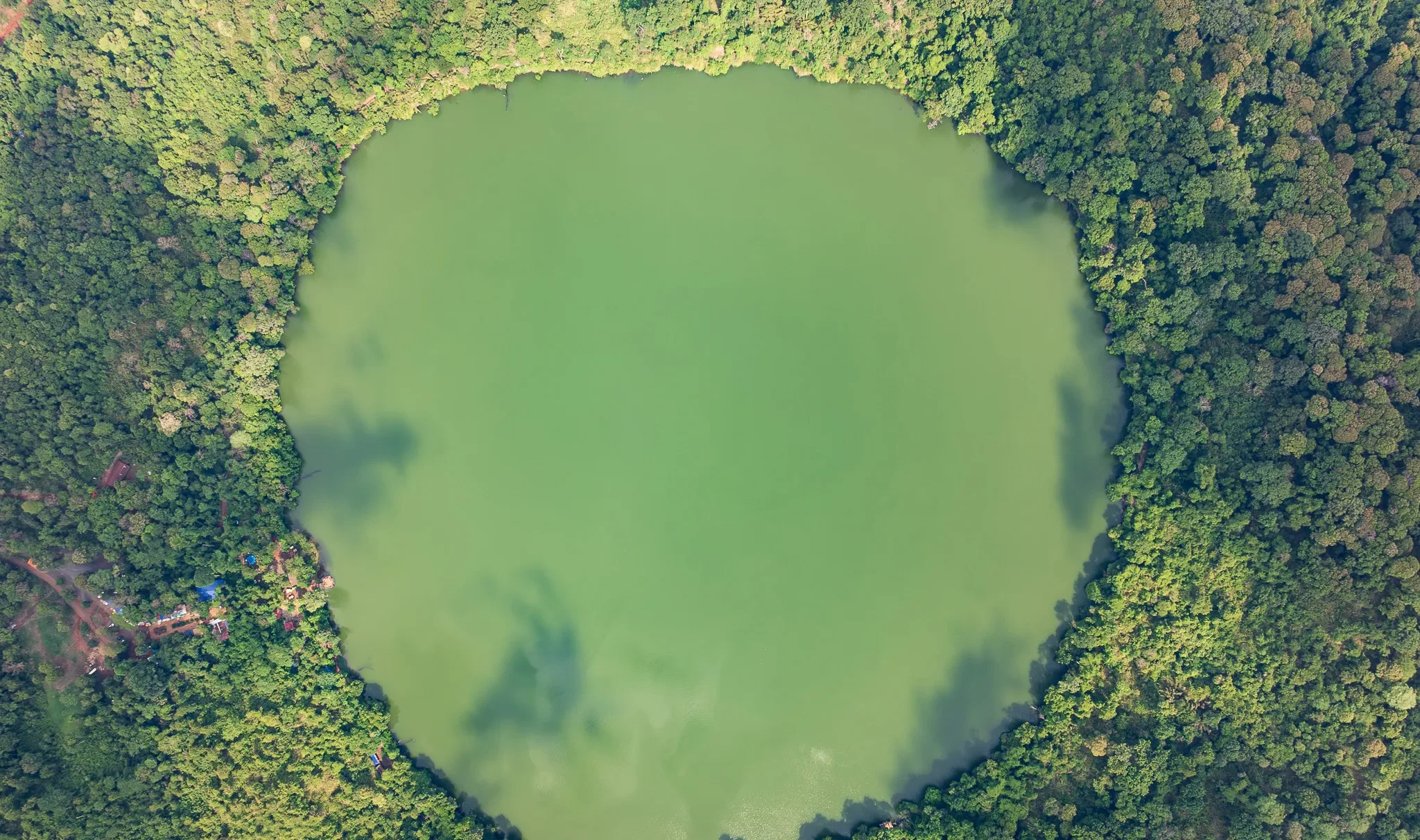
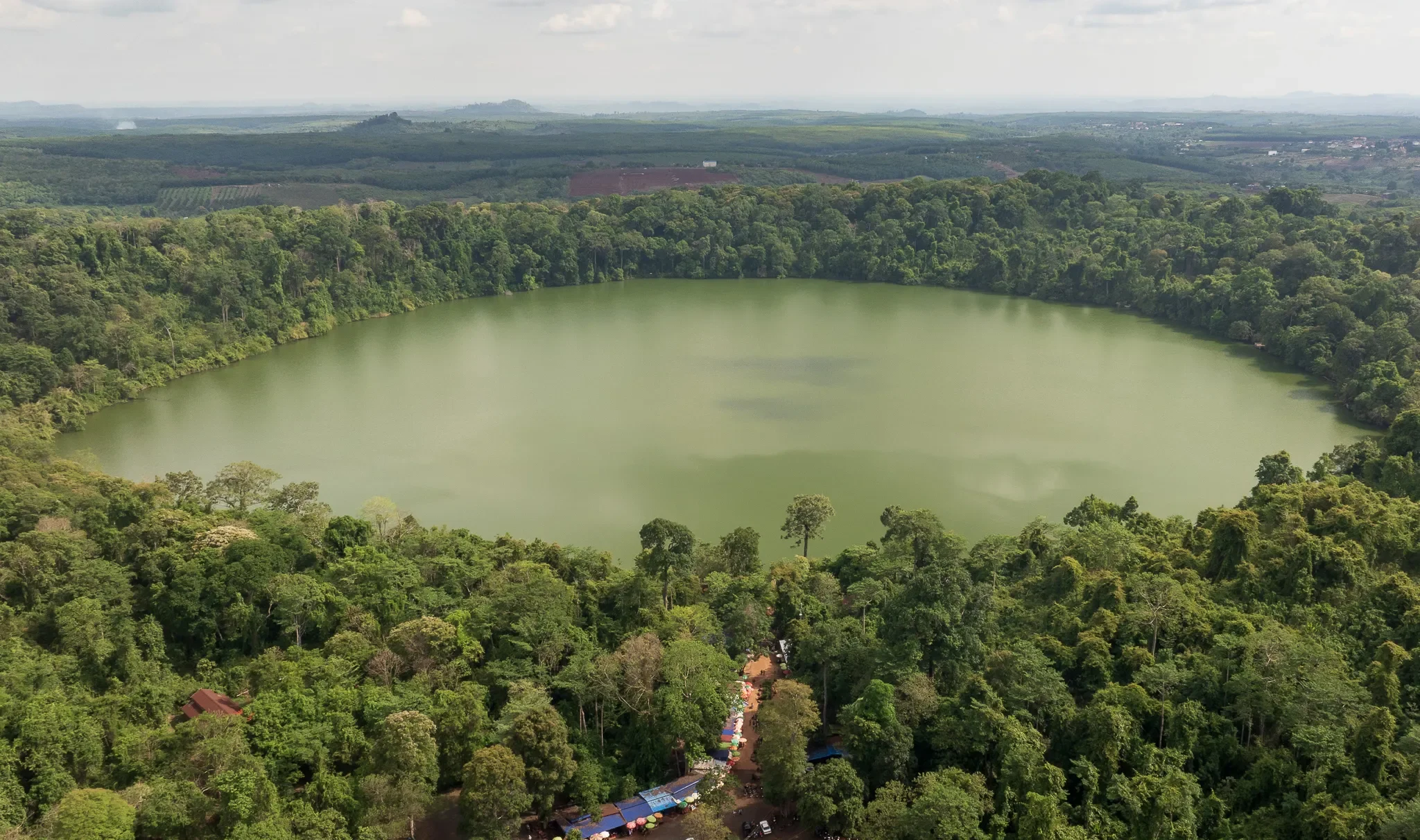
Viewed from above, Yeak Laom Lake appears almost perfectly round.
Its distinctive shape is one reason it attracts attention from travelers, photographers, and people interested in natural landscapes.
The lake is commonly described as measuring approximately 800 meters across.
Published depth estimates vary, but many tourism and development references describe a depth of around 48 to 50 meters.
Some accounts provide higher figures.
These measurements should be understood as approximate rather than definitive.
Why Is the Water So Beautiful?
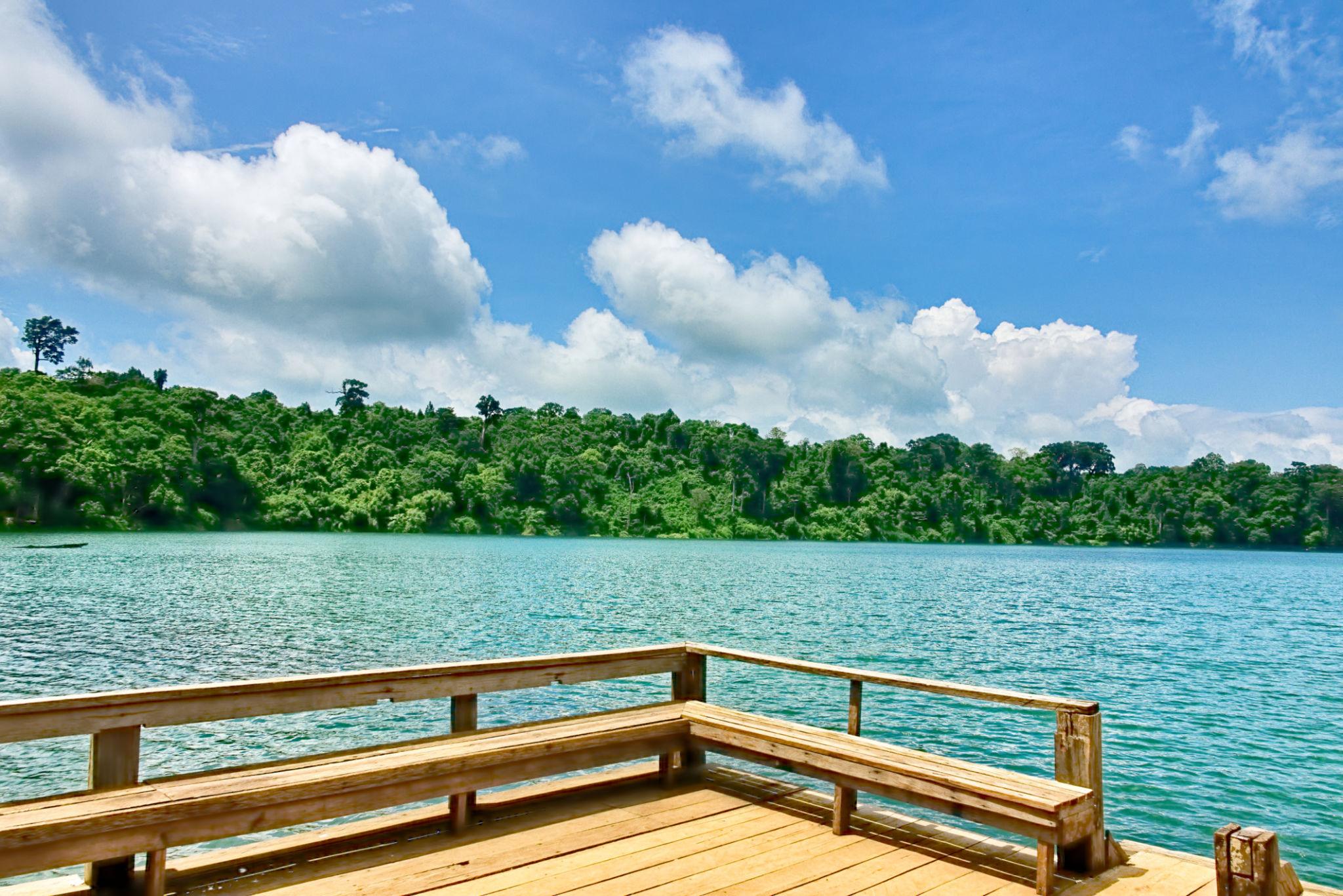
Visitors frequently describe Yeak Laom’s water as clear, with shades of blue or green depending on sunlight and viewing conditions.
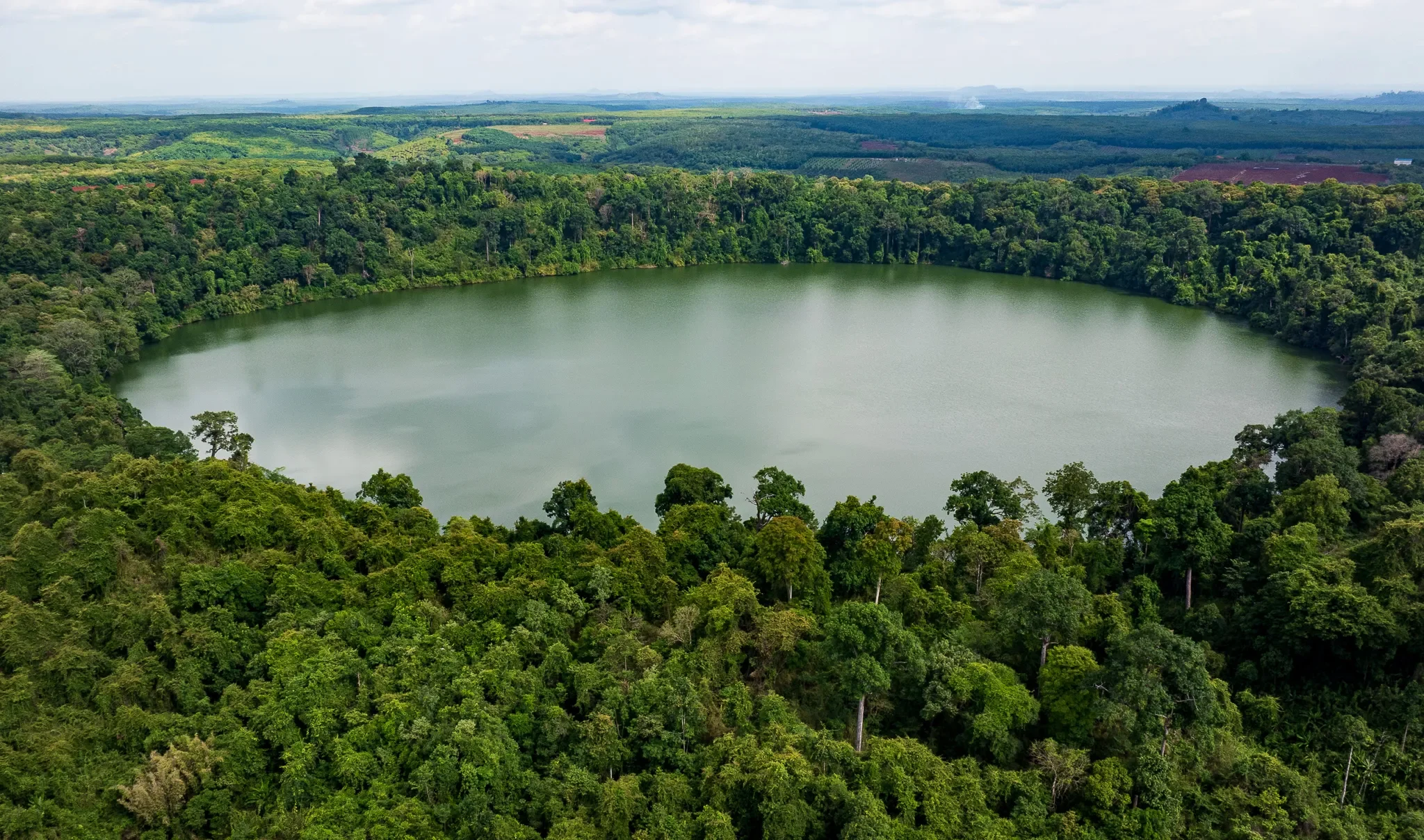
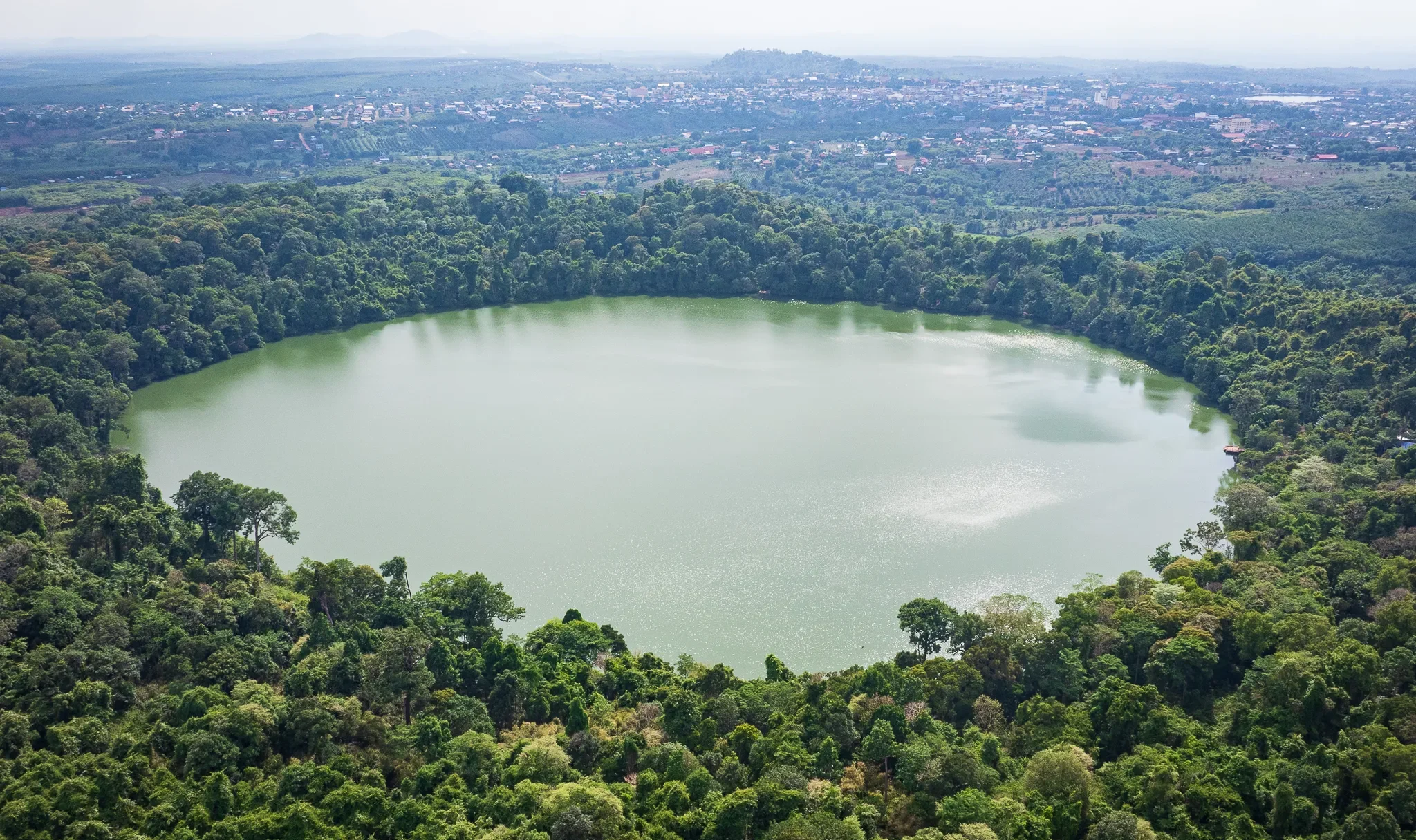
The surrounding forest creates an especially beautiful contrast with the lake’s surface.
On calm days, reflections of trees and clouds can make the landscape appear almost untouched.
However, clear-looking water should not automatically be assumed safe for drinking or swimming.
Visitors should follow current local safety guidance.
3. A Natural Treasure Surrounded by Tropical Forest
The beauty of Yeak Laom extends beyond the lake itself.
The surrounding woodland provides a peaceful environment where visitors can experience the sounds and atmosphere of northeastern Cambodia.
Tall trees, dense vegetation, and natural forest scenery contribute to the area’s distinctive character.
For travelers accustomed to busy urban environments, the lakeside offers an opportunity to enjoy a quieter setting.
Exploring the Forest Around the Lake
Walking paths around the lake allow visitors to appreciate the scenery from different viewpoints.
Depending on current access arrangements, visitors may enjoy forest walks, photography, and quiet moments overlooking the water.
The surrounding environment also offers opportunities to observe plants and listen to birds.
Protecting this forest is important because the lake and its surrounding landscape form an interconnected natural environment.
4. The Cultural Importance of Yeak Laom Lake
Yeak Laom is not simply a tourist attraction.
It is also closely connected with the traditions and cultural identity of the Indigenous Tampuan people who live in the surrounding area.
For generations, local communities have maintained relationships with the lake and nearby forest.
Traditional beliefs associate the area with sacred spirits and the natural world.
These cultural connections contribute to the lake’s significance beyond its physical appearance.
A Place of Respect and Tradition
Visitors should recognize that places considered beautiful tourist destinations may also hold spiritual meaning for local residents.
Respecting community customs, following local instructions, and treating cultural sites carefully are important parts of responsible tourism.
The Tampuan community’s involvement in tourism and conservation also highlights the value of local participation in protecting natural heritage.
5. The Legends and Mysteries of Yeak Laom
The lake’s unusual appearance has inspired local stories and legends.
Its circular shape, considerable depth, and forest setting have encouraged generations of people to wonder about its origins.
Traditional accounts and geological explanations represent different ways of understanding the landscape.
Scientific research seeks to explain the physical processes responsible for the lake’s formation.
Local legends, meanwhile, preserve cultural beliefs, memories, and relationships with the natural environment.
Both contribute to the identity of Yeak Laom, although legends should not be presented as scientific evidence.
What Lies Beneath the Water?
The deep waters of Yeak Laom naturally attract curiosity.
What does the lakebed look like?
What geological materials remain beneath the water?
How has the lake’s environment changed over time?
Answering these questions accurately would require detailed scientific investigation, including geological surveys and environmental studies.
Without such evidence, claims about hidden structures, unusual creatures, or mysterious objects beneath the lake should be treated as speculation.
The lake is fascinating enough without inventing secrets about its depths.
6. One of Ratanakiri’s Most Important Natural Attractions
Yeak Laom Lake is located approximately five kilometers from central Banlung, making it a convenient destination for visitors staying in the provincial capital.
Banlung is an important starting point for exploring Ratanakiri’s forests, waterfalls, cultural communities, and other natural attractions.
Yeak Laom is particularly appealing because travelers can experience a volcanic landscape without undertaking a long wilderness expedition.
What Can Visitors Do at Yeak Laom?
Depending on current community rules and available facilities, visitors may enjoy:
- Walking along the lakeside and forest paths.
- Photographing the circular lake and surrounding scenery.
- Relaxing in designated visitor areas.
- Learning about local Tampuan traditions.
- Exploring locally produced handicrafts.
- Swimming only where permitted and considered safe.
The lake’s depth means visitors should take water safety seriously.
Children should be closely supervised near the shoreline, and swimming should never be attempted in restricted or unsafe areas.
7. Community-Based Tourism and Environmental Protection
One of the important aspects of Yeak Laom is its connection to community-based tourism.
Local involvement can help ensure that tourism benefits surrounding communities while encouraging responsible management of natural resources.
Community-based activities may include cultural interpretation, guided visits, and traditional handicraft production.
Why Conservation Matters
Tourism can bring economic opportunities, but poorly managed visitor activity can also create environmental pressures.
Littering, damage to vegetation, inappropriate construction, and pollution may affect sensitive natural areas.
Visitors can contribute to conservation through simple actions.
Carry away rubbish, avoid disturbing wildlife, respect restricted areas, and support legitimate local businesses.
Protecting Yeak Laom requires cooperation between communities, visitors, and responsible authorities.
8. When Is the Best Time to Visit Yeak Laom Lake?
Yeak Laom can be appreciated during different seasons, although weather conditions influence the visitor experience.
During Cambodia’s dry season, generally from November to April, travel conditions may be more convenient and walking paths less muddy.
The rainy season often brings greener vegetation, but visitors should prepare for wet conditions and potentially slippery paths.
Morning and late afternoon can offer comfortable temperatures and attractive natural lighting for photography.
Visitors should confirm local access conditions before traveling, especially after heavy rainfall.
9. How to Get to Yeak Laom Lake
Most visitors begin their journey in Banlung.
From the town center, Yeak Laom is a relatively short trip by motorbike, tuk-tuk, car, or another locally available transport option.
The exact travel time depends on the starting point, road conditions, and transport method.
After reaching the visitor entrance, travelers can follow the designated route toward the lake.
Bring drinking water, suitable footwear, sun protection, and rain protection when necessary.
Admission arrangements and visitor facilities may change, so checking locally is recommended.
10. Why Yeak Laom Deserves Greater Recognition
Cambodia is internationally famous for its ancient temples, particularly Angkor.
However, the country also possesses remarkable natural landscapes that deserve recognition.
Yeak Laom represents a different dimension of Cambodian heritage.
Its significance comes from the combination of geology, tropical scenery, local traditions, and community stewardship.
The lake reminds visitors that Cambodia’s history is not limited to monuments built by human hands.
Natural processes have also shaped the country’s landscapes over immense periods of time.
By preserving places such as Yeak Laom, Cambodia can protect both its environmental heritage and the cultural traditions associated with it.

Final Thoughts
Yeak Laom Lake remains one of the most distinctive natural destinations in Ratanakiri Province.
Its nearly circular shoreline, clear-looking water, surrounding forest, and volcanic origin create a landscape that is both beautiful and scientifically interesting.
At the same time, the lake’s importance extends beyond geology.
For the local Tampuan community, it is connected to cultural identity, traditional beliefs, and a long relationship with the surrounding environment.
Although questions remain about its precise geological age and detailed underwater features, these uncertainties should encourage careful research rather than unsupported speculation.
For visitors, Yeak Laom offers a chance to appreciate one of Cambodia’s remarkable natural landscapes while learning about the people who have helped protect it.
Yeak Laom is more than a lake. It is a meeting place of nature, history, culture, and the enduring beauty of Cambodia’s northeastern highlands.